 Toggle Coffee
(Not) espresso tonic
The lamp's not lit, the calendars are lying… And if you've dug out your spring clothes, put them away again. (c)
Disclaimer: everything said and described below is the strictly personal opinion of one particular barista, though she will defend it with a stubbornness worthy of a better cause.
Hi, Varya here.
With the arrival of the warm season (I realise that sounds like a joke, and a poor one at that, but it is May after all), demand for cold drinks traditionally goes up. And while the temperature of the drinks drops and the ice machines run flat out, the temperature of the arguments around the classics that time simply cannot kill only keeps climbing.
This time the innocent victim of the debate was the espresso tonic. You would think the name alone already contained the entire concept of the drink. Ice, Indian tonic, espresso. That is how Anne Lunell dreamed it up at Koppi Roasters back in 2007, where it went on to headline the summer menu. It accounted for 95% of all iced coffee orders right up until the coffee shop closed. For the original recipe Anne herself suggests Fever Tree tonic, a slice of lemon (or orange, or some other tart berry or fruit) and a shot of espresso on an acidic lot — an Ethiopia, say, or a Kenya. What matters especially, she says, is not to skimp on the ice and to fill the glass almost to the brim. That tonic, by the way, is on our menu, and you can — and should — try the real, classic recipe.
But the industry never stands still, and now over a tonic proven by time and by thousands of happy guests there loomed… something. Out of nowhere, in one of the trade communities, an argument flared up so refreshing that no Fever Tree ever dreamed of the like. I fully intended to sleep through my day off like a marmot in autumn dosed with sedatives, and yet by eight in the morning I was at Toggle Coffee, ready to test the intel together with a colleague.
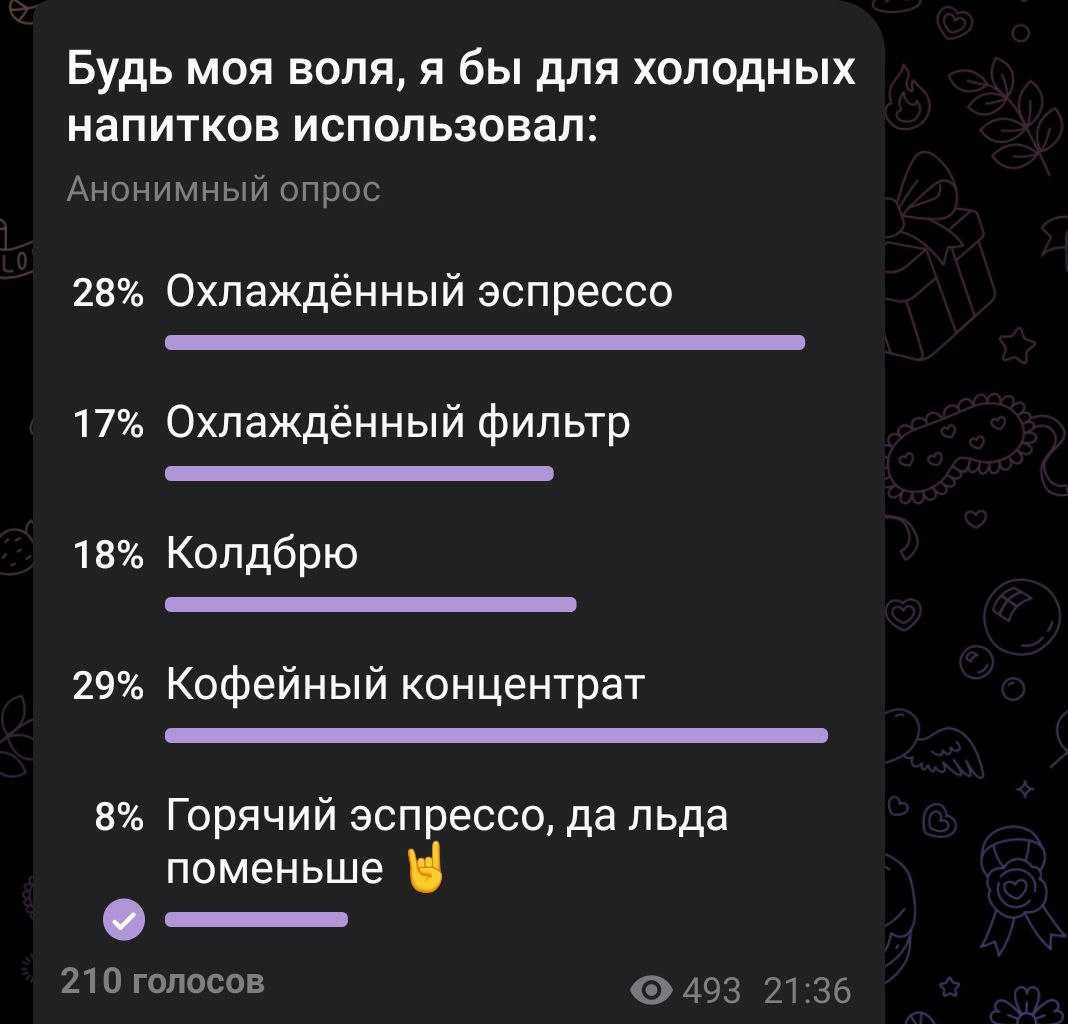
Is it true that only obscurantists and dinosaurs drink espresso tonic made on fresh, hot espresso? What do you replace it with? Can you? And should you?

I made and tasted five versions, and I'm ready to go through each one in detail.
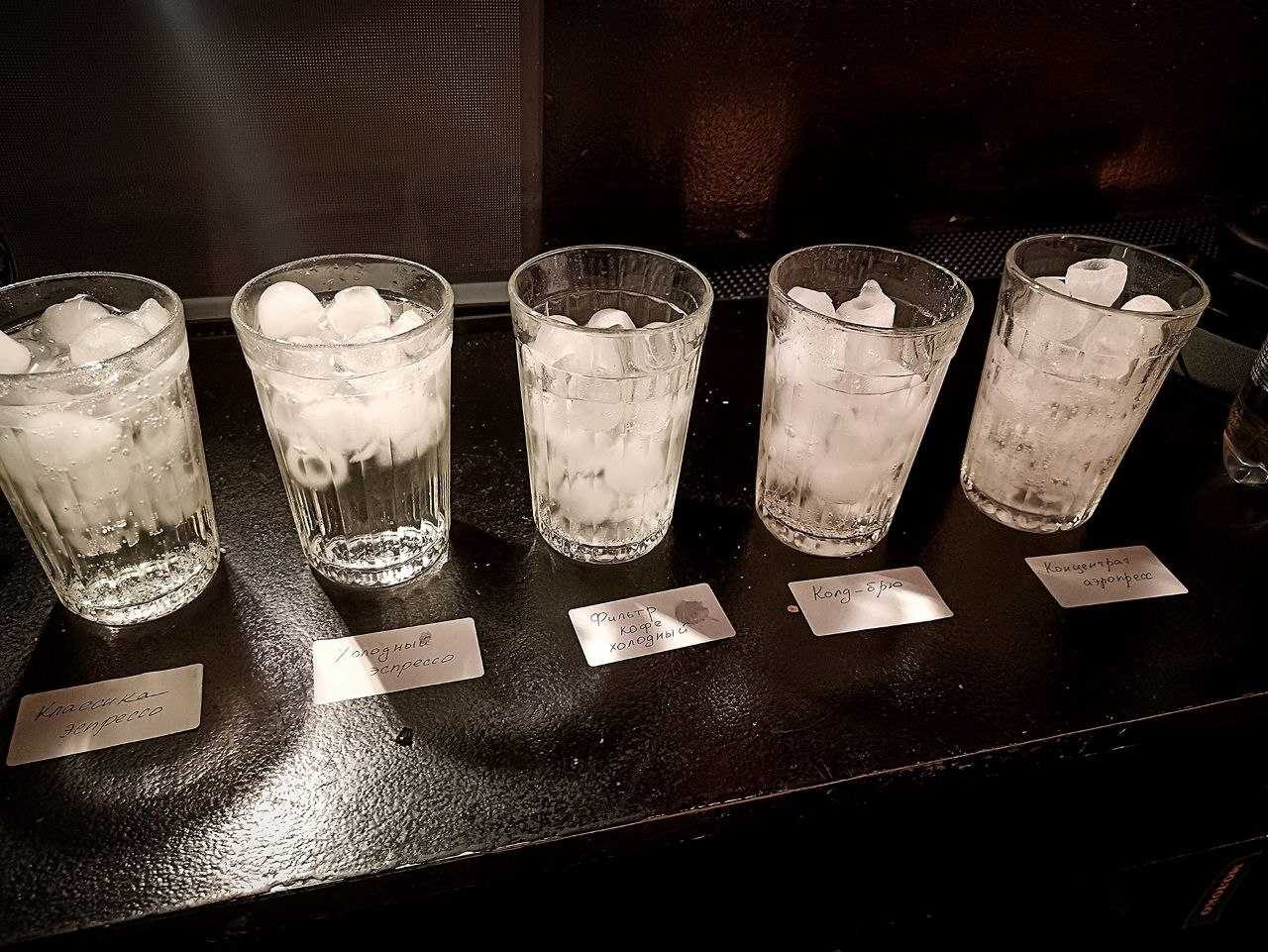
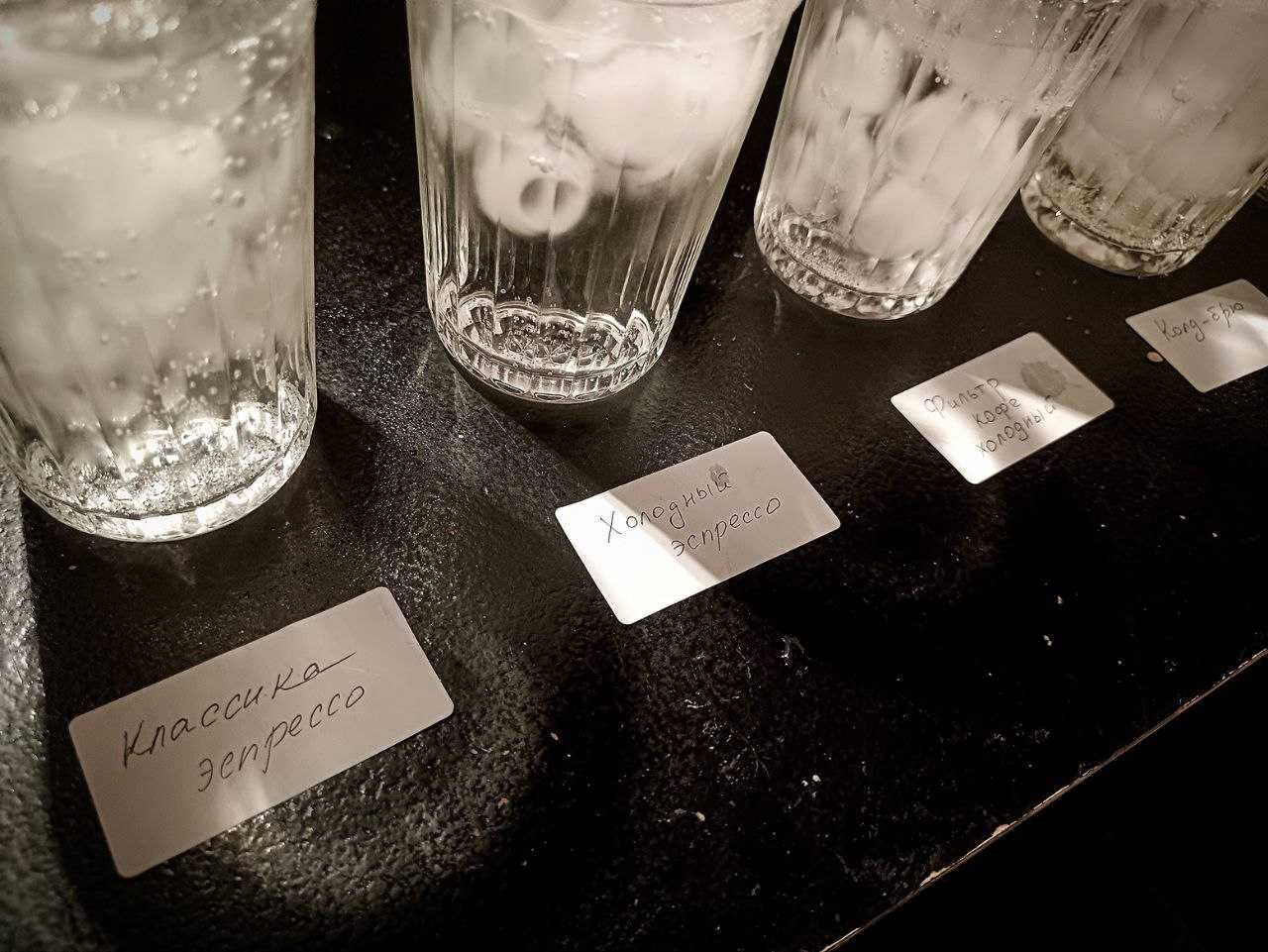
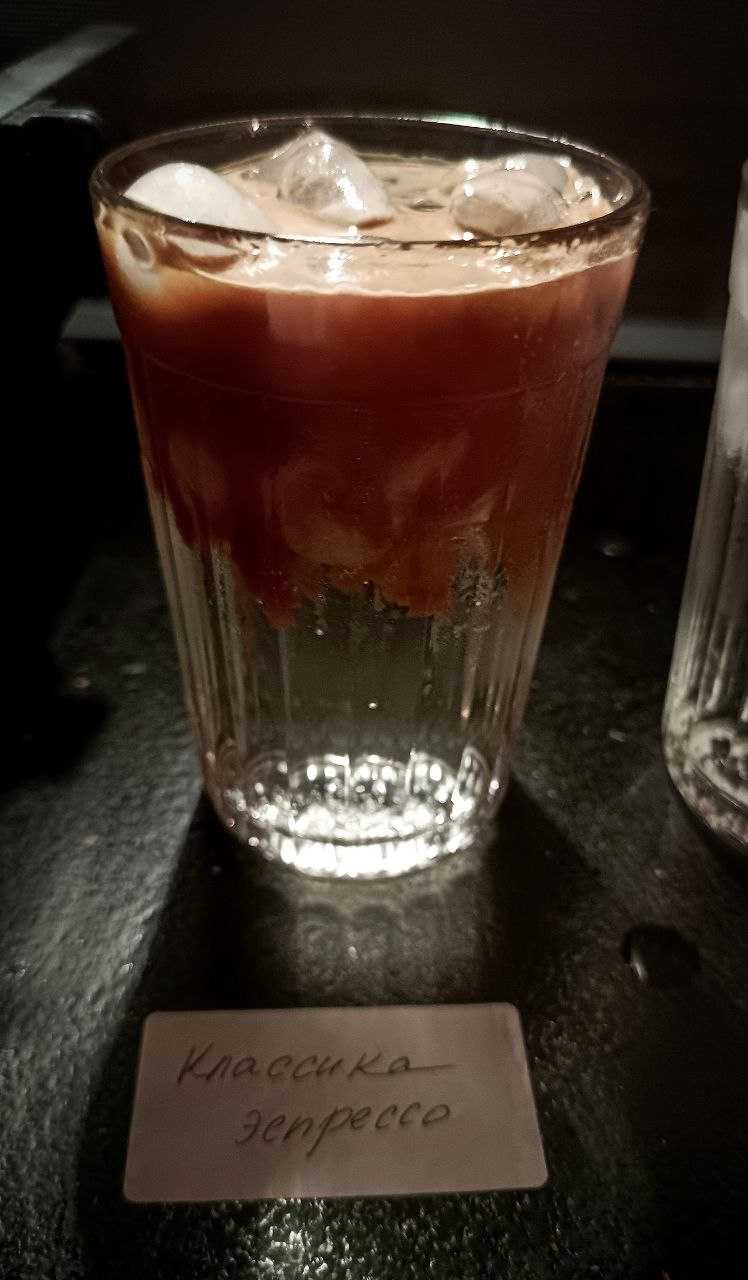
The first thing we brewed today was the classic espresso tonic, the way we make it in the coffee shop. A shot of fresh espresso on Brazil Mogiana. I cut the extraction a touch short to bring up the acidity. You can't argue with the classics: this is exactly the taste you expect from an espresso tonic, foam included, which for a lot of people is non-negotiable. A lot of the people arguing made a point of that "nasty little cap" that appears when you pour hot espresso in. Poured carefully over the ice, the foam is minimal and gives you that velvety first sip which, as everyone knows, is the best one.
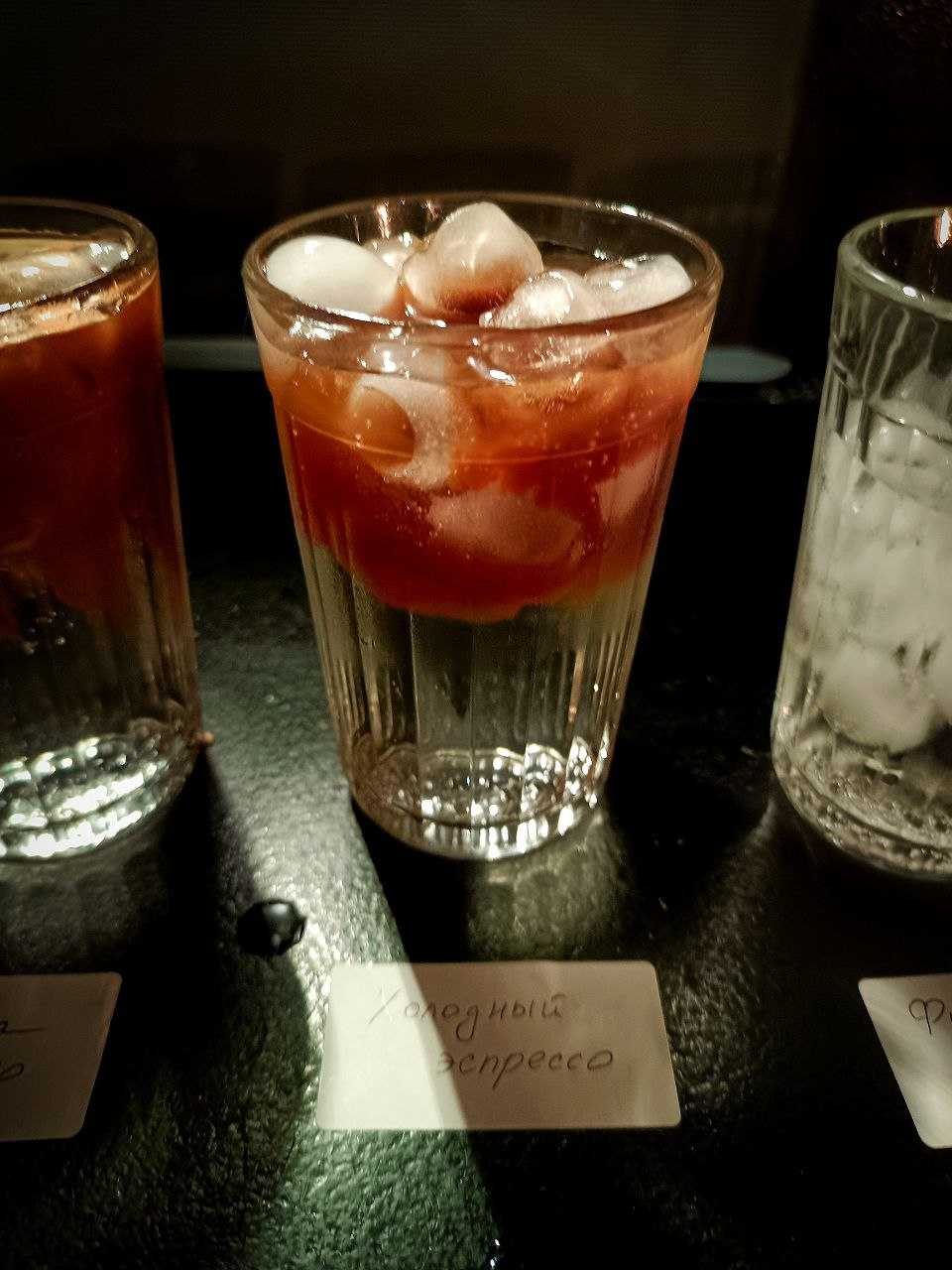
Next up was cold espresso. Here my fellow baristas went at each other over whether it has to be filtered through paper or whether you can simply stick it in the fridge. Honestly, here I am going on my own personal opinion and nothing else: for me, cold espresso is dead espresso. And if you strain it on top of that… So as I performed these procedures I felt like a sadistic doctor at the very least. We decided to filter it anyway, to keep to the terms of the experiment. Well, it came out noticeably sweeter. Filter out the oils (I used a single AeroPress filter) and the acidity goes with them, and the tonic starts to dominate badly. Plus there's no foam, and the mixing looks distinctly odd, as though the espresso "sinks" into the mass. One of the virtues of the original espresso tonic was how photogenic it is. That is precisely what got outlets the size of The Guardian and The New York Times writing about it back in the day. Well — this is not pretty. Commercially it may be somewhat more convenient, since you can pull the shots in advance, but on taste and on looks it's a critical fail.
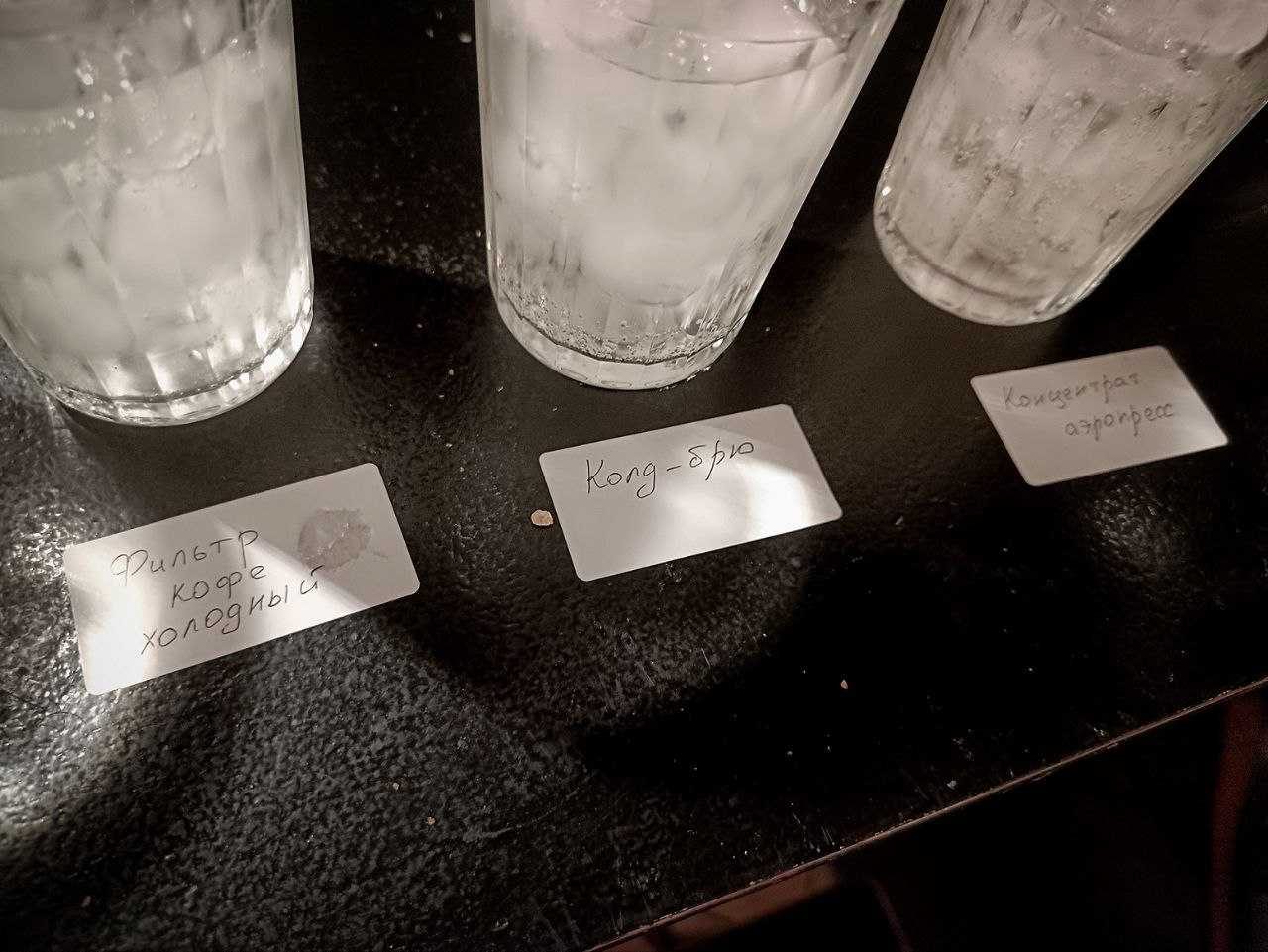
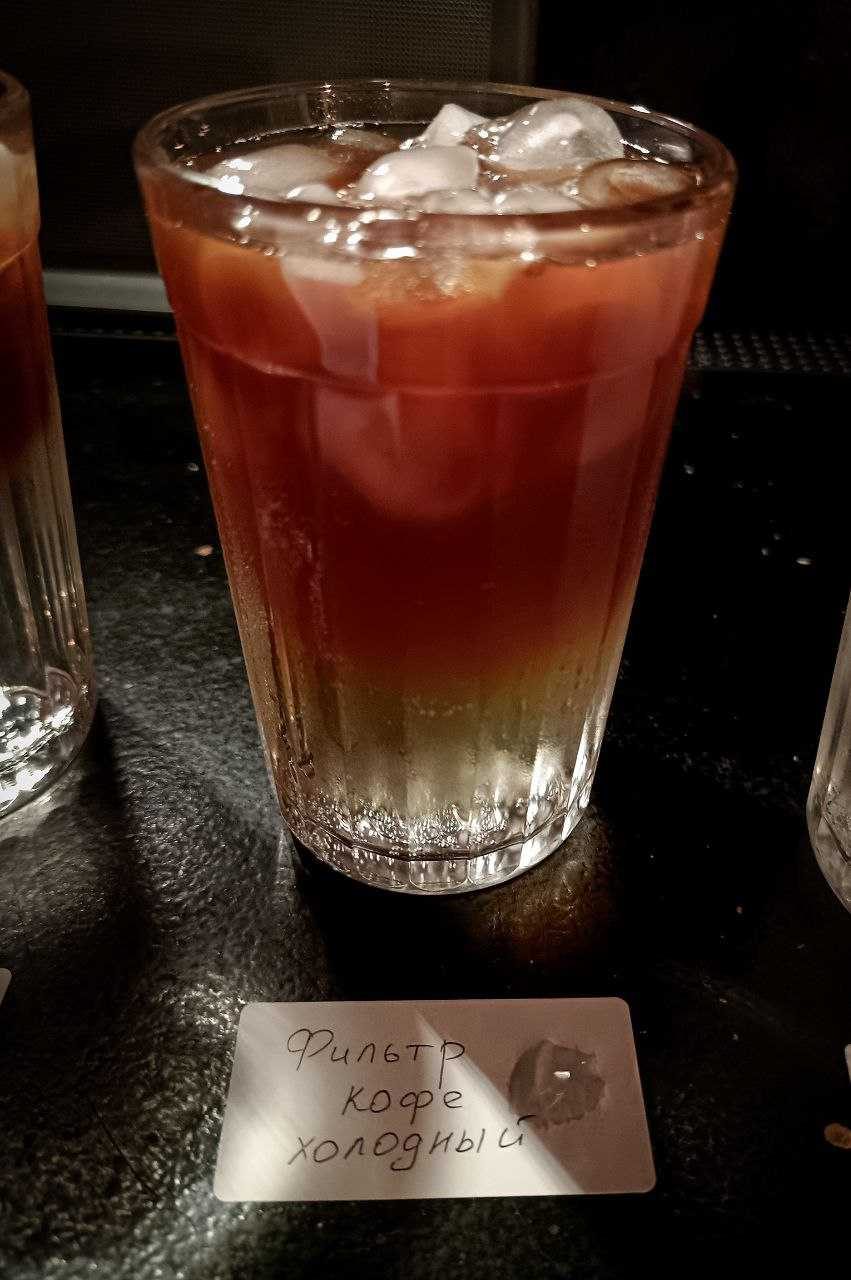
Next — cold filter. Our filter was brewed on an anaerobic Colombia Castillo, which was meant to supply the acidity we needed. I had certain hopes for this one, precisely because of the beans, although the phrase "cold filter" itself isn't exactly thrilling for the taste buds. Naturally the proportions had to change, since filter doesn't have the concentration espresso does. So here it was 60 g. Well, no miracle occurred. Tastewise it's cold brew with a faint hint of tonic, nothing like what you expect from a coffee tonic in the first place. Yes, it refreshes, but the taste is a long way from what you're after. You could just as easily drop a slice of lemon into a cold brew. Take a base with a really pronounced flavour and you can get a decent coffee lemonade out of it, but that's as far as it goes.
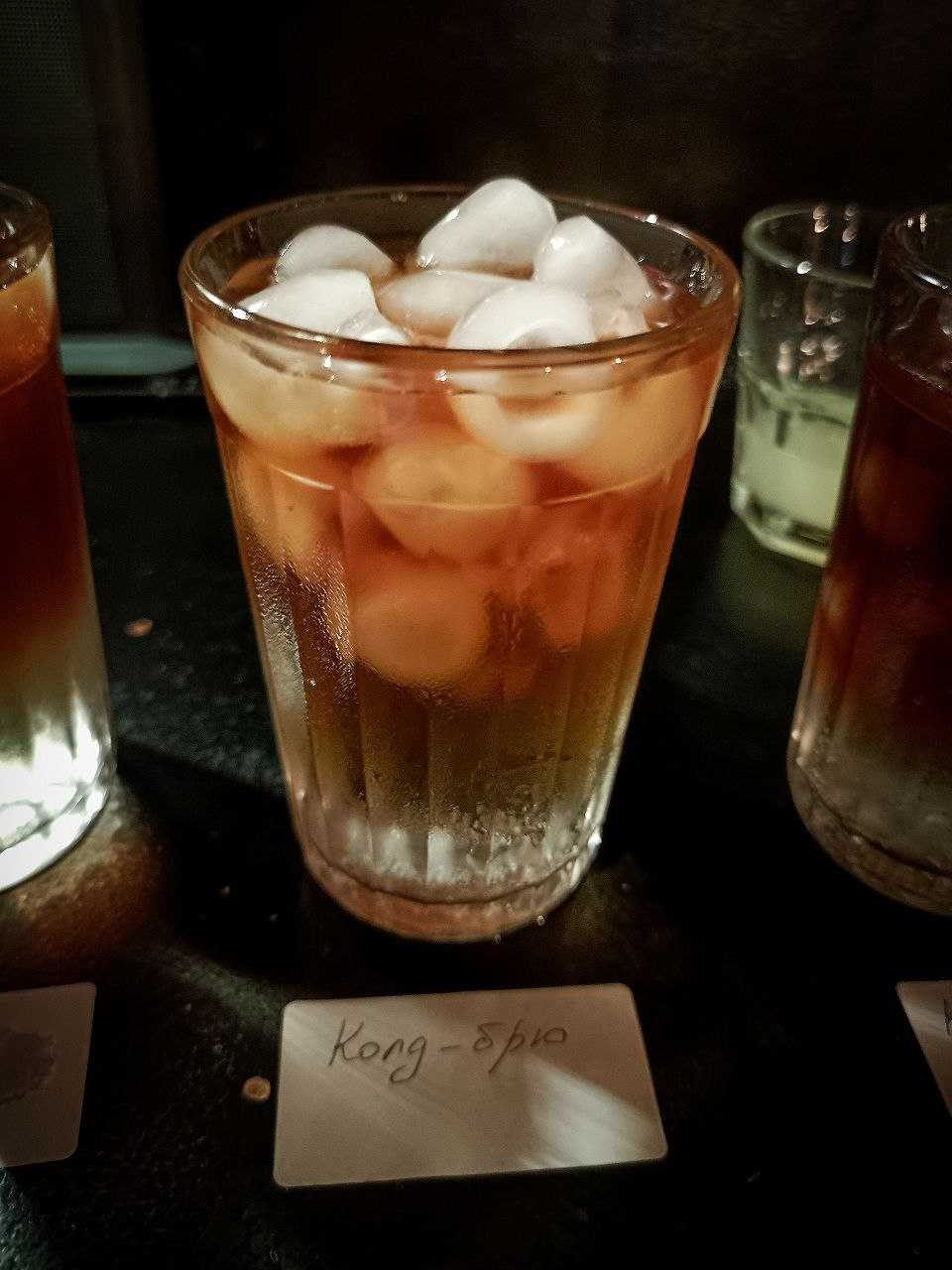
By this point I already knew the next glass wasn't going to give me anything. Almost literally. Even though a great many people were rooting hard for the "coffee tonic on cold brew" option, the moment I started pouring 60 g into the glass it was clear this was a washout. You could see straight away that the concentration wasn't there — not remotely. But the taste… the taste is kvass. Honest to God. Mild homemade granny's kvass, you can even catch a thin note of fermentation. Maybe if you increase the amount of cold brew you'd get a fuller flavour, but I suspect it would simply be denser kvass. If I ever fancy something along those lines, I won't go to a coffee shop, I'll go to the nearest Pyaterochka. The Ethiopia Sidamo didn't save it.
The last glass, though, was a surprise to me. In the discussions people were voting enthusiastically for coffee concentrates, insisting the future belongs to them. As a fully paid-up obscurantist and dinosaur, I find that prospect fills me with dread and a gloom the colour of freshly whisked matcha.
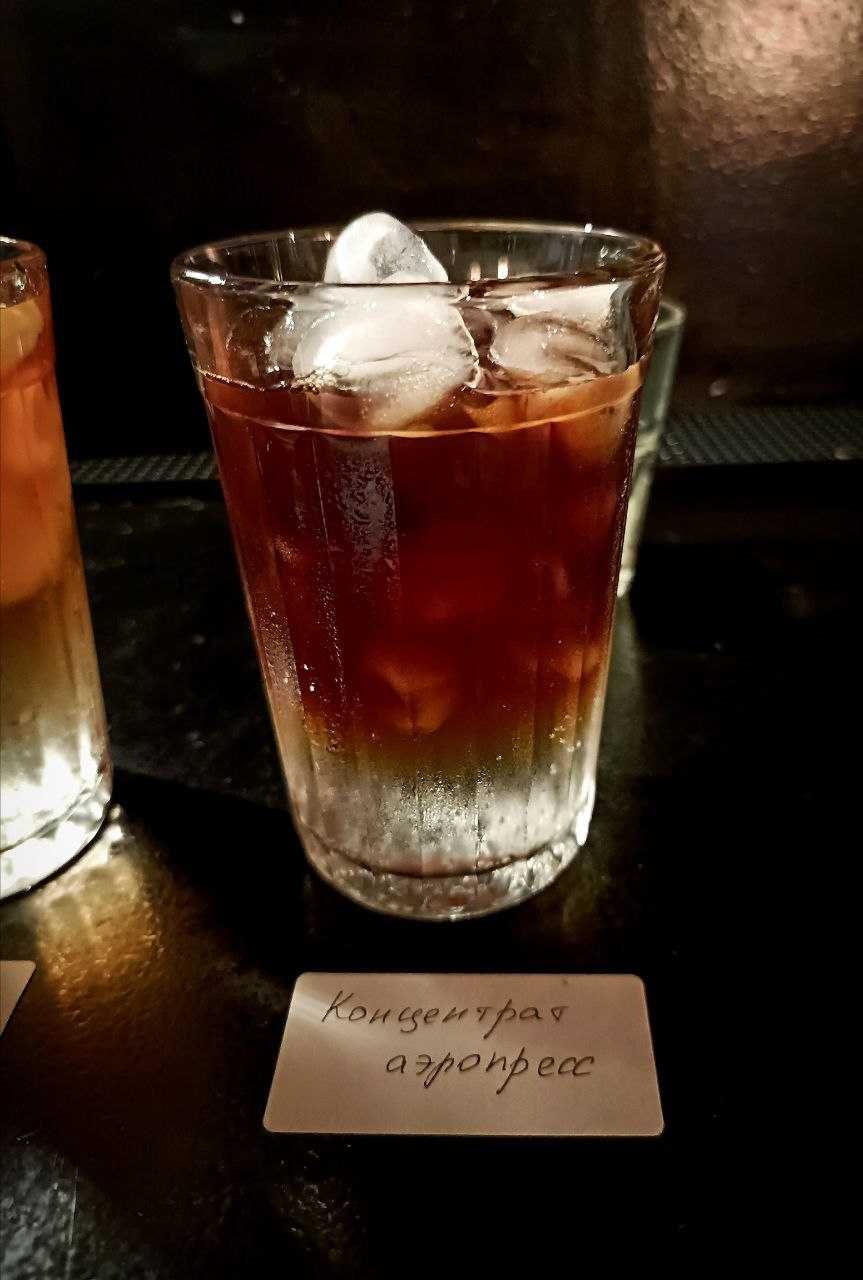
To paraphrase the famous Warhammer 40k tagline — "in the grim darkness of the far future there is only coffee concentrate". Since that far, dark future thankfully hasn't arrived yet, I don't have any. So there was no pure experiment here, but there was a lovely discovery instead. If we haven't got anything like that, why not make it ourselves? I think all our guests already know about my sinful attachment to the AeroPress, so it's hardly a surprise that this was the method I reached for. AeroPress Colombia Castillo — I brewed a concentrate at 20 g / 70 g, as if for a bypass. Yield around 40 g, roughly an espresso shot. A little weaker in concentration, but the transitions in the flavour are finer. That's interesting. A very bright, expressive colour, a taste that really catches you. We're not saying this is an espresso tonic — it's a coffee tonic. But it's striking, with a very long, beautiful aftertaste, and every component in it gets to play. Yes, there's no foam, but the combination makes up for it. Quite possibly one of the best coffee tonics I've ever tasted. Plus an enormous field for experiments with brewing, beans and ratios.
To sum up. There are things that are good exactly as they are. They are the base, the foundation. You can work with it, you can modernise it, you can experiment on top of it. But denying its fundamental importance is pointless and futile. The classic stays the classic, and it delivers an excellent, consistent result. Of the alternatives I personally liked exactly one; the rest I wouldn't put in front of guests, for various reasons. So — we're waiting for the weather to warm up, and do come in for an espresso tonic, especially now that we know everything about it (almost).
Love you all.